Therapeutic indications · Postural and motor disorders

Postural and motor disorders: when the functional framework remains unstable.

For the doctor – physiatrist, orthopedist, neurologist – and for those working in rehabilitation, when changes in postural control, balance or coordination are not fully explained by structural damage. On this page: what exists, what has been studied, with what limits.

In practice

When the picture is not explained by injury alone

In the assessment of patients with postural or motor changes — by age, after an acute event or in a rehabilitation pathway — part of the picture does not correspond to structural damage: Fluctuating asymmetries, unstable balance, slower recovery than the injury justifies.

It is the most difficult component to measure and treat: Functional tests record it, but the rehabilitation plan has few tools to act directly on the central motor control, and the time of stay or treatment is extended.

It is in this space that it makes sense to consider a complementary – non-invasive option, applicable in a single session or in short cycles, and which can be integrated into the rehabilitation path without replacing it.

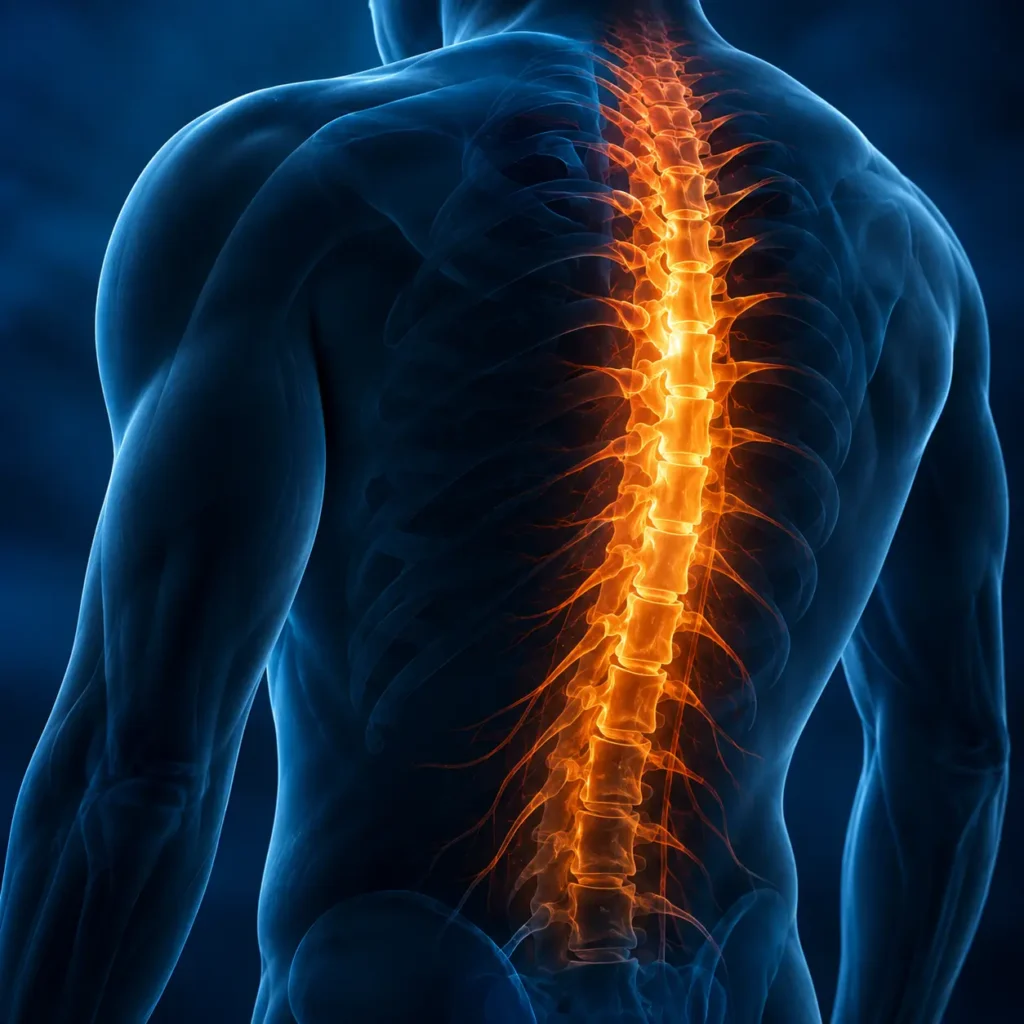
Three-dimensional representation of the spine with highlighting of the back-lumbar tract

What exists

REAC® protocols for this area

For postural and motor disorders, REAC® Technology provides two neuromodulation protocols, applied with the medical device BENE Mod 110. The scope of application, as defined in the technical documentation, includes alterations in static and dynamic postural control, coordination and balance disorders, and motor disorders.

01

NPO – Neuro Postural Optimization

A single auricular application of 500 milliseconds with the handpiece probe. It is aimed at functional dysmetry: an asymmetry of the motor response — visible, for example, in the extension of the lower extremities — that does not depend on an injury but on an adaptation of the central motor control. For doctors, dentists and psychologists.

02

NMO – Neuro Muscolar Optimization

Surface application with the ACP electrode on muscle groups with asymmetric activation, for functional rebalancing between agonists and antagonists: about eight minutes per session, in cycles of 18 sessions. Reserved for doctors.

03

The sequence in the path

In the most recent studies the two protocols are used sequentially: an NPO session at the start of rehabilitation, followed by a cycle of NMO sessions alongside standard physiotherapy.

The treatment is painless, occurs on intact skin and, according to the technical documentation, there are no known contraindications to the concomitant use of pharmacological therapies.

What literature says

What has been studied

Eleven clinical publications of Rinaldi and Fontani (2011–2025) on postural and motor control, plus two fMRI studies on healthy volunteers, are indexed in PubMed. These include: a randomized cross-over study against sham, two observational studies with historical control group, pilot studies and case reports. Here the main ones, with design and number.

Motor effects of radio electric asymmetric conveyer in Alzheimer's disease: results from a cross-over trial

Journal of Alzheimer's Disease · 2014

Randomized, cross-over, sham-controlled · 60 elderly patients (mean age 84) with Alzheimer's disease in nursing homes (RSA) and a day centre · NPO protocol · motor measures at four time points, safety surveillance for 35 days · outcomes on axial movements variable between the two phases, inconsistent effects on gait, good tolerability.

View on PubMed →

REAC Neurobiological Modulation With Neuro Postural Optimization (NPO) and Neuro Muscular Optimization (NMO) in Early Post-stroke Recovery

Cureus · 2025

Observational with historical control group · 13 treated patients (average age 74) and 13 controls · early post-stroke phase · one NPO session and 10 NMO sessions in 5-6 days, alongside rehabilitation · Barthel Index, Fugl-Meyer (mobility), functional dysmetry.

View on PubMed →

Clinical Impact of Neuropostural and Neuromuscular Optimization Protocols With REAC Technology in Older Adults With Femoral Fractures: An Observational Study

Cureus · 2025

Observational with historical control group · 14 treated patients (mean age 82) and 14 controls · elderly operated for femoral fracture · one NPO session and 10 NMO sessions with standard physiotherapy · Barthel Index, VAS, length of stay.

View on PubMed →

Effects of REAC Neuro Postural Optimization on Gait and Postural Symmetry in Older Adults

Journal of Frailty, Sarcopenia and Falls · 2025

Before/after, without control group · 18 elderly adults (average age 72) · single NPO session · Timed Up and Go, walking speed, Five Times Sit-to-Stand, handgrip.

View on PubMed →

The limits to know: the only randomised trial has non-uniform outcomes; the 2025 studies use historical, non-randomised controls with small numbers; measures are taken immediately after the session or at the end of the stay, without long-term follow-up, with the exception of a retrospective case study on functional dysmetry.

Frequently Asked Questions

Before evaluating it: the most frequently asked questions

As a complementary option, alongside physiotherapy and the program already set, not as a replacement. In the 2025 studies, the sequence is an NPO session at start-up and an NMO cycle parallel to rehabilitation. Evaluation, selection of treatment and judgment on the results remain with the professional.

NPO: a single auricular application of 500 milliseconds. NMO: sessions of about eight minutes, in cycles of 18, spaced at intervals of at least one hour and at most two weeks; the technical documentation recommends one to three cycles per year.

An asymmetry of the motor response — e.g. in the extension of the lower extremities during a simple test — that does not result from an injury but from an adaptation of the central motor control. It is the sign on which the NPO protocol is set and one of the parameters evaluated in the studies.

Treatment is contraindicated in established or suspected pregnancy, in carriers of pacemakers or other active implantable devices and in the presence of damaged skin in the area of application. The expected side effects reported in the technical documentation — in about one in ten patients — are nausea (feeling sick), headache, anxiety, restlessness, mood swings, asthenia and muscle soreness, spontaneously regressing.

A discussion with technical-scientific support to examine relevant protocols, technical documentation and publications, and understand how it fits into the workflow. The pathway includes initial training and ongoing assistance: Route and Support.

Regulatory note

The indications of use, contraindications and warnings of REAC® devices are only those indicated in the technical documentation and in the instructions for use, in accordance with the regulatory framework for medical devices. This page describes the areas of application documented, without constituting a promise of clinical outcome.

Do you want to evaluate REAC® protocols in your rehabilitation path?

Let's talk about it with technical and scientific support: an assessment, without obligation.

Request an evaluation