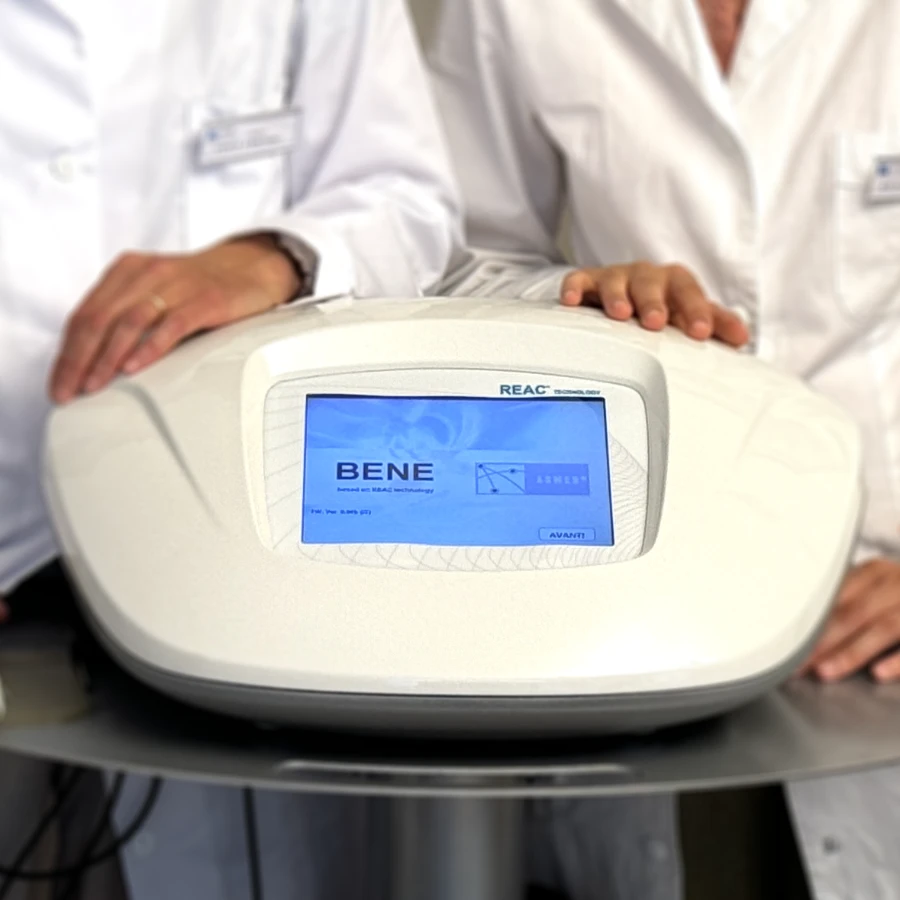
The medical device BENE Mod 110 (Bio Enhancer Neuro Enhancer) is the tool through which Neurobiological Modulation Therapy is delivered REAC (Radio Electric Asymmetric Conveyer).
Designed for exclusive use by qualified medical personnel, this device generates a weak flow of radio fields which, by interacting with theendogenous bioelectric activity of the body, aim at optimising the physiological processes of regulation and repair.
A key feature of the device BENE Mod 110 is its customization with specific standardized and non-modifiable therapeutic protocols by the operator. This approach ensures uniformity and replicability of treatment in each session, a crucial aspect for clinical practice and scientific research. Through these protocols, the doctor can apply specific treatments for the different areas of intervention documented by the literature.
With the term ACP (Asymmetric Conveyer Probe) A family of non-invasive electrodes is identified that can only be used on electromedical equipment based on REAC® Technology.
Its fundamental role is to convey asymmetrically the weak flow of radioelectric currents, generated by the device, in a targeted way on the anatomical area to be treated. This function of "conveyor" is what allows the specific interaction between the signal and biological tissues, according to the principles of technology.
To adapt to the different needs of therapeutic protocols, ACP probes are available in different types. The probes point-shaped are specifically designed for application on precise points of the auricle in the protocols of Neuro Postural Optimization and Neuro Physical Psychological Optimization, while the probes planar are optimized for the treatment of extended surfaces in all other Neurobiological Modulation and Tissue Optimization treatments.
The specific design of each probe is decisive for the correct execution of the therapeutic protocol, ensuring that the biophysical interaction takes place according to the parameters established by scientific research for that specific application.
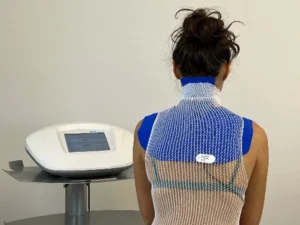
Probe Name: ACP NPPO-CB
Associated Protocol: Neuro-Physical Optimization Protocol - Cervical Brachial (NPPO-CB).
Application Area: The cervico-brachial region. The probe is placed on the skin surface of the area between the neck and shoulder.
Morphology and Use: This probe has a planar and flexible morphology, designed to ergonomically adapt to the complex anatomical surface of the cervicobrachial region. It is kept in place through a tubular elastic band to ensure stable and homogeneous contact with the skin during the entire duration of the treatment session.
Purpose of the Protocol: The NPPO-CB protocol, delivered through this probe, is aimed at optimizing the neuropsychophysical response to stressors. The scientific literature documents its application in the treatment of symptoms associated with disorders such as anxiety, depression and stress.
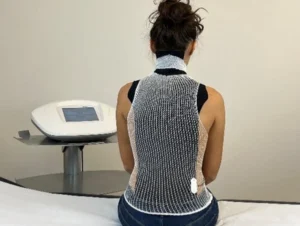
Probe Name: ACP ANM CDL
Associated Protocol: Antalgic neuromodulation (ANM) protocol.
Application Area: Region cervico-dorso-lumbare. The probe is designed to cover the entire spine, extending from the cervical (neck) to the lumbar (lower back) area.
Morphology and Use: This probe has an elongated and flexible shape, specially designed to adhere to the curvature of the back. It is applied directly to the skin, with the conductive side in contact with the patient, and kept in place through a dedicated elastic bodice or garment. This ensures uniform and stable contact throughout the treatment area for the duration of the session.
Purpose of the Protocol: The ANM protocol, delivered through this specific probe, is aimed at reducing painful symptoms. Its application is useful in the treatment of algic syndromes affecting the spine and related areas, acting directly on the areas to be treated.
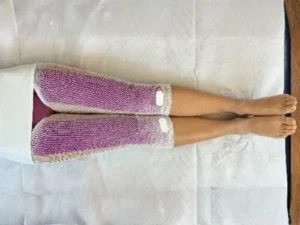
Probe Name: ACP CO-DB
Associated Protocol: Circulation Optimization Protocol (CO).
Application Area: Lower limbs. The "DB" application involves the simultaneous use of a pair of probes, positioned symmetrically on both lower limbs.
Morphology and Use: The kit consists of a pair of planar probes, shaped to fit the surface of the legs. They are applied with the conductive side in contact with the skin and kept in a stable position by tubular elastic bands. This configuration allows both lower limbs to be treated bilaterally and simultaneously.
Purpose of the Protocol: The CO protocol, as specified in the manual, is indicated for tissues with vascular component prevalence. The application through the CO-DB probe is therefore aimed at optimizing local circulation in the lower limbs. It is designed to contribute to the reduction of edema, feeling of heaviness and other symptoms associated with inefficient circulation.
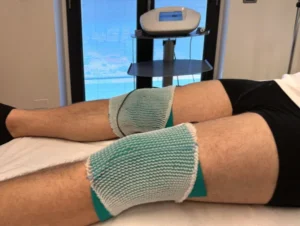
Probe Name: ACP MP-DB
Associated Protocol: Reparative Tissue Optimization Protocol (TO-RPR).
Application Area: Lower limbs (bilateral application).
Morphology and Use: This kit consists of a pair of planar probes, defined "Multi Purpose" for their versatility of application on different anatomical areas. In the "DB" configuration, they are placed symmetrically on both lower limbs. As with other ACP probes, they are applied with the conductive side in contact with the skin and are fixed by tubular elastic bands to ensure stable adhesion.
Purpose of the Protocol: The TO-RPR protocol is a Tissue Optimization treatment designed to promote repair processes in medium and deep tissues, especially in the presence of an inflammatory component. The application with MP-DB probes on the lower extremities is indicated for the treatment of lesional, post-traumatic or inflammatory pictures localized in these areas, supporting the natural capacity of tissue regeneration.
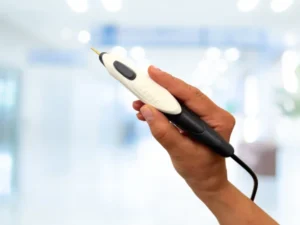
Name: MANIPLE
Associated Protocols:
Neuro Postural Optimization (NPO)
Neuro Psycho Physical Optimization (NPPO)
Application Area: Headset pavilion.
Morphology and Use: The handpiece is a manual probe, managed directly by the operator, which ends with a removable golden tip. Unlike the planar ACP probes that are left in place, the handpiece is used for point-like, precise and very short-lived applications.
The operator places the golden tip of the handpiece on specific points of the earpiece, as defined by the NPO and NPPO protocols. The radio pulse emission is activated manually by the operator himself by pressing a button integrated into the handpiece.
Purpose of the Protocol: The handpiece is the tool for Neurobiological Modulation protocols that act through the stimulation of specific reflex points of the auricle.
With the NPO protocol: a single pulse is given for optimisation of neuro-postural control.
With the NPPO protocol: seven pulses are given in sequence for the optimization of the neuro-psycho-physical response, useful in the treatment of symptoms of behavioral disorders, mood and algic syndromes.


 EN
EN  IT
IT  PT
PT  DE
DE  ES
ES  FR
FR