asmed-srl-scandicci-reac-neuro-biological-modulation-official

Therapeutic protocols

The REAC® Technology it uses a series of therapeutic protocols designed to act in specific medical fields through two main mechanisms of action: Neurobiological modulation and theTissue Optimization.

Each protocol has been developed to respond to Precise clinical needs, allowing the doctor to select the most appropriate intervention based on diagnosis and therapeutic objectives.

Below, the main families of protocols are presented, grouped by medical area of competence, in order to provide a clear and organised view of their indications of use, as documented by the scientific literature.
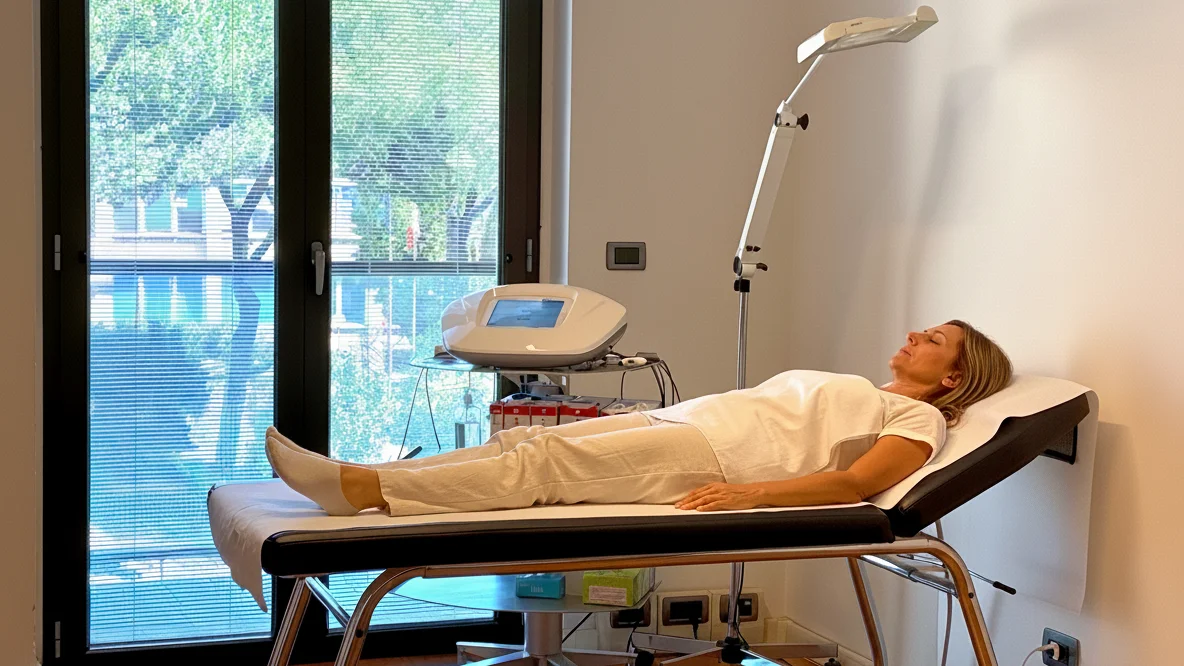
reac-teraphy-bene-mod-110
Session of Neuro-Psycho-Physical Optimization Therapy
Asmed
×

Applications

NPO

Black Postural Optimizzation

Neuro Postural Optimisation (NPO) is a neurobiological stimulation treatment. It is used to determine the initial process of optimizing the adaptive responses of the central nervous system, in particular for neuro-psychomotor functions such as fluctuating asymmetries and functional dysmetries. The application is carried out with the handpiece for point applications on a precise point of the earpiece. The effectiveness of treatment can be demonstrated by the immediate disappearance of functional dysmetries, particularly in the lower extremities. NPO treatment consists of a single administration, as the effect is stable over time.
ask for information

NMO

Black Muscolar Optimizzation

Neuromuscular Optimisation (NMO) is a local neurobiological stimulation treatment. It is directly applied on muscle groups that manifest an asymmetric activation and therefore need a functional rebalancing between agonist and antagonistic muscles, with rehabilitative purposes and optimization of neuromuscular management. It is performed using ACP positioned to treat contralateral antagonistic muscles. The number of treatment cycles varies according to the clinical picture.
ask for information

NPPO

Black Psycho Physical Optimizzation

The Neuro Physical Psychological Optimisation (NPPO) treatment is a neurobiological stimulation treatment useful in the symptoms of behavioural and mood disorders. The application can be point-like (NPPO), applying the probe handpiece to seven precise sequential points of the ear canopy, or it can be done by applying the ACP on the cervicobrachial area (NPPO CB). Although the two methods of administration have the same indications for use, the method of administration with ACP is indicated when symptoms of behavioural disorders and mood are associated with states of muscle tension at the level of the cervicobrachial region. The number of treatment cycles varies according to the clinical picture.
ask for information

NPPO

Black Psycho Physical Optimizzation

The Neuro-Psychic Physical Optimization (NPPO) treatment is a neurobiological stimulation treatment useful in algic syndromes. The application can be point-like (NPPO), applying the probe handpiece to seven precise sequential points of the ear canopy, or it can be done by applying the ACP on the cervicobrachial area (NPPO CB). Although the two methods of administration have the same indication of use, the method of administration with ACP is indicated when there are also states of muscle tension at the level of the cervicobrachial region. The number of treatment cycles varies according to the clinical picture.
ask for information

ANM

Antalgic Neuro Modulation

The Neuro Antalgic Modulation (ANM) treatment is a neurobiological stimulation treatment useful in algic syndromes. This treatment is carried out using the ACP positioned on the algal zones to be treated. The duration of the single session will be chosen by the caregiver on the basis of the symptomatic picture. The number of treatment cycles varies according to the clinical picture.
ask for information

TO

Tissue Optimization

The Therapeutic Protocol of Tissue Optimization (TO) is composed of a set of neurobiological stimulation treatments useful in restorative/regenerative processes in inflammatory, algodystrophic and lesional, even post-traumatic, frameworks. The TO protocol is carried out using the ACP positioned on the areas of the body to be treated. The type of treatment and the number of sessions and cycles are chosen by the attending physician on the basis of the patient's clinical picture. TO sessions should be spaced between a minimum of one hour and a maximum of two weeks. It is possible to carry out up to 4 sessions per day.

  • ACT – Treatment aimed at reducing local and systemic inflammation and improving the biomechanical properties of the skin and subcutaneous tissue, particularly indicated in the presence of lipodystrophy, cellulite and fibrotic components.
  • CO – Treatment aimed at optimising blood circulation and tissue perfusion, reducing edema and improving venous and lymphatic return.
  • MO – Treatment aimed at restoring metabolic balance, correcting metabolic dysfunctions associated with chronic inflammation and improving the distribution of adipose tissue and overall metabolic health.
  • TO-RPR – Treatment aimed at promoting restorative and regenerative processes in damaged, lesional, necrotic or post-traumatic tissues.
ask for information

Contact us

ASMED® has been present in the Italian market since 2002 and the international sales network is constantly growing and evolving. Contact us for more information about the local distributor.
Privacy*
© 2002-2026 ASMED® Srl P.IVA 05184180486 - REA FI-27046 - CAP. SOC. 60.000,00 EURO I.V. - All Rights Reserved - Release 1.0 - Privacy Policy

the Rinaldi Fontani Institute

You are leaving the ASMED® Srl website to access the website of the Rinaldi Fontani Institute in Florence.
GO to the irf website

Scientific publications

You are leaving the website of ASMED® S.r.l. to access the website of the Rinaldi Fontani Institute in Florence.
GO to the irf website

Section under construction

This section, where the scientific work behind REAC® Technology will be introduced, will be available soon. In the meantime, it is possible to consult directly the studies published on PubMed.
PubMed

Choose your language

Choose your preferred language: